NAD
A coenzyme involved in cellular energy processes.
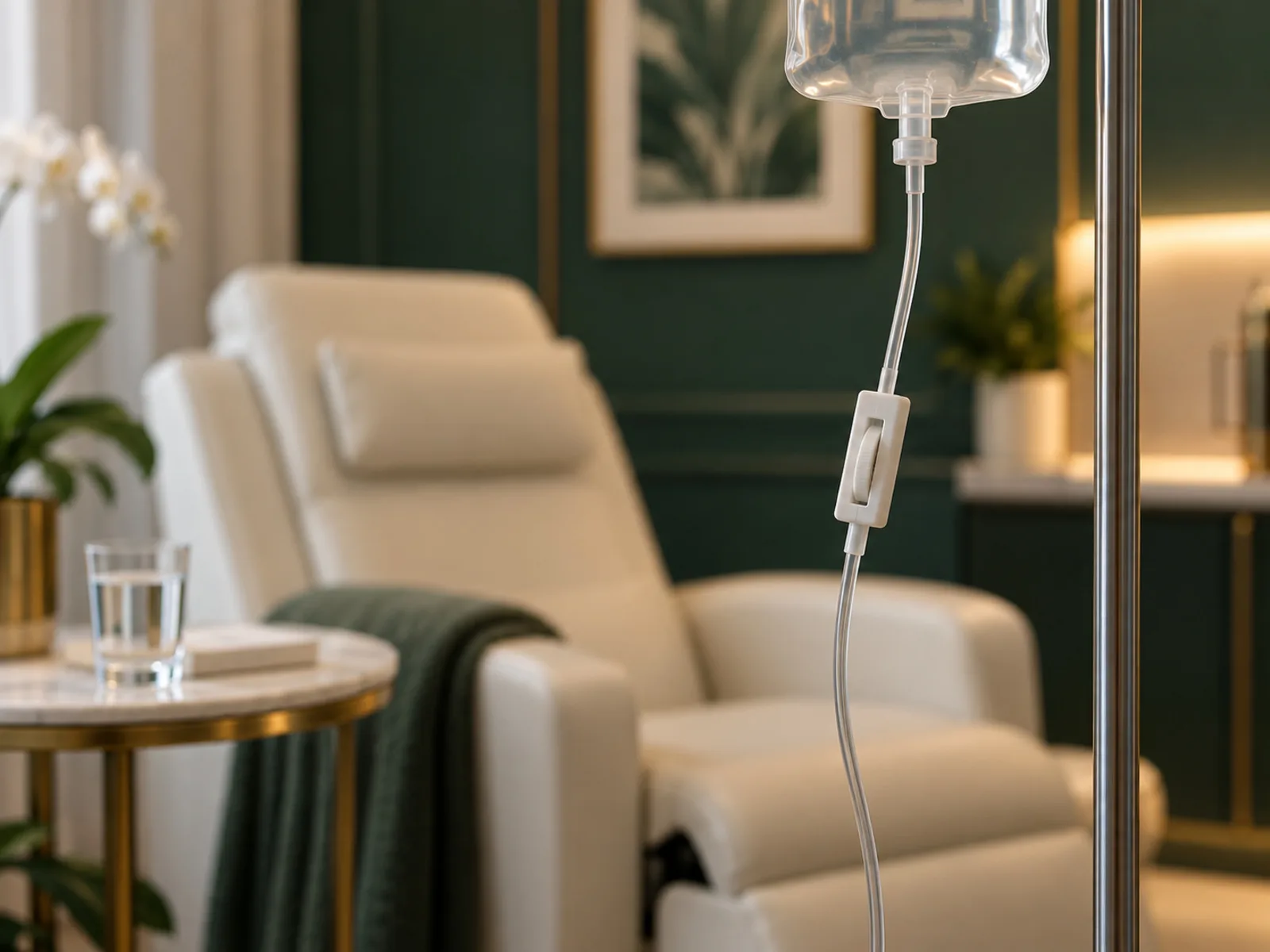
NAD is a coenzyme involved in the energy-producing processes of cells. In intravenous application it is given slowly in an infusion; because giving it quickly can cause discomfort, the application takes longer than other infusions. It is not presented as a treatment for any disease and is not planned without a physician assessment.
- Duration
- 2 – 4 hours (slow infusion)
- Sessions
- Within a programme set by the physician
- Comfort
- Intravenous; no anaesthesia needed
- Back to routine
- Same day
Who is it for?
Suitable candidates
- Adults who have passed a physician assessment with no contraindication
- People describing a heavy schedule and fatigue
- Anyone able to set aside time for a long application
When it is not appropriate
- Pregnancy and breastfeeding
- Serious heart, kidney or liver disease
- Patients undergoing active cancer treatment (physician assessment mandatory)
- Anyone not in a position to complete the length of the application
Suitability is confirmed only after a physician examination and, where needed, tests. The information on this page is general and does not replace individual medical advice.
How it is done
- 01
Assessment
Medical history and tests are reviewed and suitability is established.
- 02
Dose and rate plan
The infusion rate is adjusted to your tolerance.
- 03
Application
A line is placed and the infusion is given slowly, under observation.
- 04
Observation
Comfort is monitored throughout; the rate is reduced if needed.
Afterwards
- Drinking plenty of water afterwards is recommended.
- Avoiding strenuous activity for the first few hours is sensible.
- The infusion is slowed if you feel nausea or pressure in the chest.
- The session plan continues as set by the physician.
Frequently asked questions
Why does it take so long?
Given quickly, NAD can cause nausea and a feeling of pressure in the chest. The infusion is therefore deliberately slow; the duration is a consequence of comfort, not of dose.
Does it stop ageing?
No. NAD is a coenzyme involved in cellular energy processes; no claim is made that it stops ageing. The application is planned as support.
What does it feel like?
Some people describe mild warmth, nausea or pressure in the chest. The infusion rate is then reduced and the sensation usually settles.