Women's health · 10 min read
Hair loss in women: the causes and the route to a correct diagnosis
Hair loss in women rarely has a single cause. Any intervention made before the cause is found only postpones the problem.
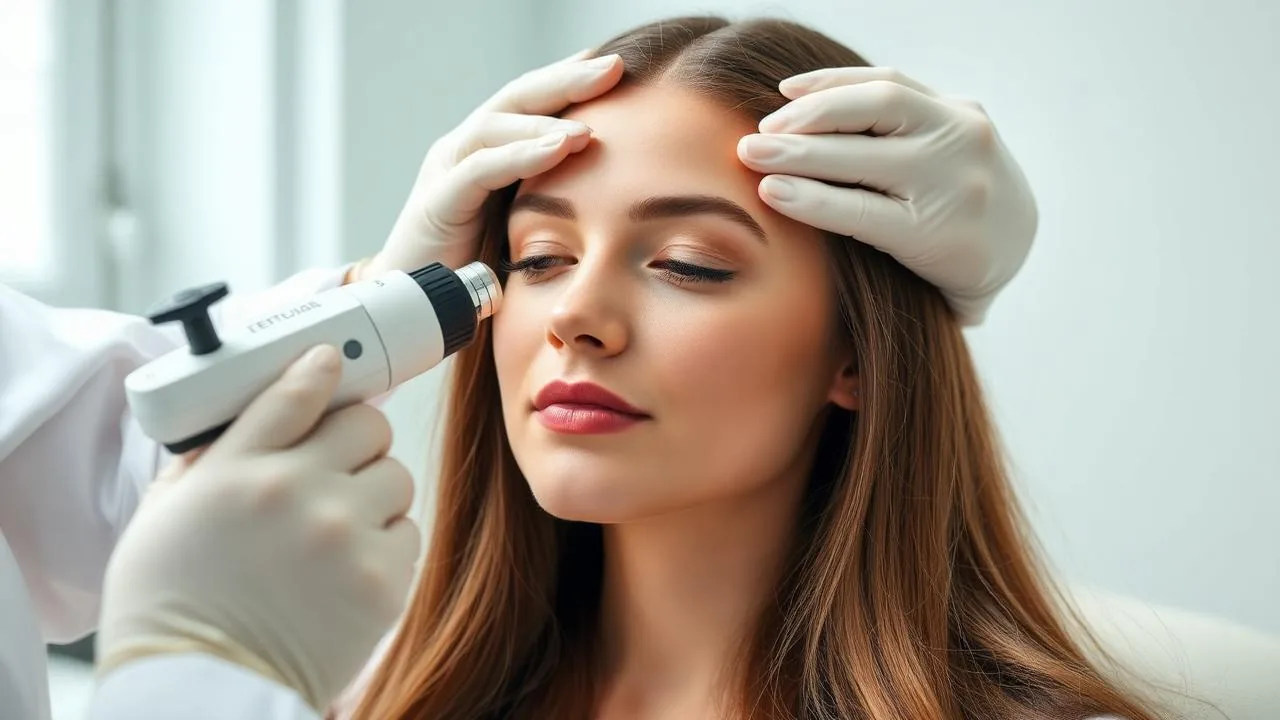
Hair loss in women follows a different course from men's: instead of a localised bald area, it usually shows as diffuse thinning along the parting. That difference matters, because the same appearance can have very different causes beneath it.
So the right order is this: find the cause first, then plan the treatment. A hair transplant performed without investigating the cause does not give a lasting result, because the underlying problem continues.
Androgenetic (genetic) loss
This is the most common type of permanent loss in women. The parting widens markedly and density at the crown reduces; complete baldness as seen in men generally does not occur.
It is a progressive process. In the early stage it can be slowed with medical support; once marked thinning has developed and the donor area is sound, a hair transplant comes into consideration.
Telogen effluvium: temporary but heavy shedding
This is the body's response to a sudden stress: childbirth, surgery, a febrile illness, severe dieting, serious psychological stress. It begins 2–3 months after the trigger and usually resolves on its own within 6–12 months.
A hair transplant is not performed in this picture. The shedding is temporary and the follicles are in place; intervention is unnecessary and also misleading.
- Post-partum shedding is the most typical example; it settles in 6–12 months.
- Rapid weight loss and low-protein diets are common triggers.
- Some medications (blood thinners, retinoids, certain antidepressants) can produce a similar picture.
Thyroid, iron and vitamin deficiencies
Both an under- and an overactive thyroid disrupt the hair cycle. Low ferritin, the marker of iron stores, is also a very common and easily missed cause in women.
In these pictures the loss generally recedes once the underlying deficiency is corrected. That is why the first step of assessment is a blood test.
Hormonal causes
Polycystic ovary syndrome, the menopausal transition and a change of contraceptive method can all affect the hair cycle. Where there are additional findings such as increased body hair, irregular periods or oily skin, hormonal assessment takes priority.
Treatment in this group is usually multidisciplinary; dermatology and gynaecology assess together.
Traction alopecia
Tight ponytails, braids, extensions and always gathering the hair the same way apply prolonged mechanical pressure to the follicle. Thinning starts first at the temples and along the hairline.
Caught early, it reverses once the habit stops. If it has continued for a long time the follicle is permanently lost; in that case a hair transplant is an appropriate option.
Scarring (cicatricial) alopecias
In pictures such as frontal fibrosing alopecia and lichen planopilaris, the follicle is permanently destroyed by an inflammatory process; shiny, flattened areas appear on the scalp.
A hair transplant is not performed in this group while the condition is active — transplanted grafts would be affected by the same process. The condition must first be brought under control and then observed quiet for at least a year.
Which tests are requested?
Assessment starts with examination; the scalp is examined with a trichoscope and the pattern of loss established. The following tests are then usually requested:
- Full blood count
- Ferritin (iron stores)
- TSH, free T4 (thyroid function)
- Vitamin B12 and vitamin D
- Where needed, a hormone profile (androgens, prolactin)
When is a hair transplant the right option?
A hair transplant replaces a lost follicle with another, so it is only meaningful where the loss is permanent. In temporary shedding, the right thing to do is treat the cause and monitor the process.
A suitable candidate is a patient whose cause of loss has been established, whose donor area is sound and whose expectations are realistic. Where those conditions are met, a no-shave procedure allows the process to go ahead without cutting the hair.
Frequently asked questions
Can I have a hair transplant for post-partum shedding?
No. Post-partum shedding is a telogen effluvium and usually resolves on its own within 6–12 months. A transplant is not advised in this period; the process is monitored and supportive treatment planned if needed.
Can a hair transplant be done while breastfeeding?
It is not. Because of the medications used during and after the procedure, it waits until breastfeeding has finished.
Does hair loss in women resolve on its own?
It depends on the cause. Telogen effluvium and loss driven by iron deficiency or thyroid dysfunction recede once the cause is corrected. Androgenetic loss, however, is progressive and does not resolve on its own.
How many hairs a day is normal to lose?
Losing 50–100 hairs a day is considered normal. What matters is the trend rather than the number: a visible reduction in density, a widening parting or a thinner ponytail all warrant assessment.
Do vitamin supplements stop hair loss?
Only if there is a deficiency. Supplements taken without one provide no benefit, which is why the decision to supplement follows a blood test.
All articles
Techniques
Sapphire FUE or DHI? Which technique suits you
Choosing a technique is not a matter of fashion but a decision specific to the case. Here are the real differences between the two methods.
Planning
How is the graft count decided in a hair transplant?
"How many grafts do I need?" has no single correct answer. Donor capacity, the degree of loss and the density you are aiming at are calculated together.
Planning
Cheap hair transplants: what is cut when the price falls?
Most of the cost of a hair transplant is team time, consumables and sterile conditions. Those are fixed — so when the price falls, something is being cut.
Free remote assessment, no obligation.
Book a consultation