Planning · 7 min read
How is the graft count decided in a hair transplant?
"How many grafts do I need?" has no single correct answer. Donor capacity, the degree of loss and the density you are aiming at are calculated together.
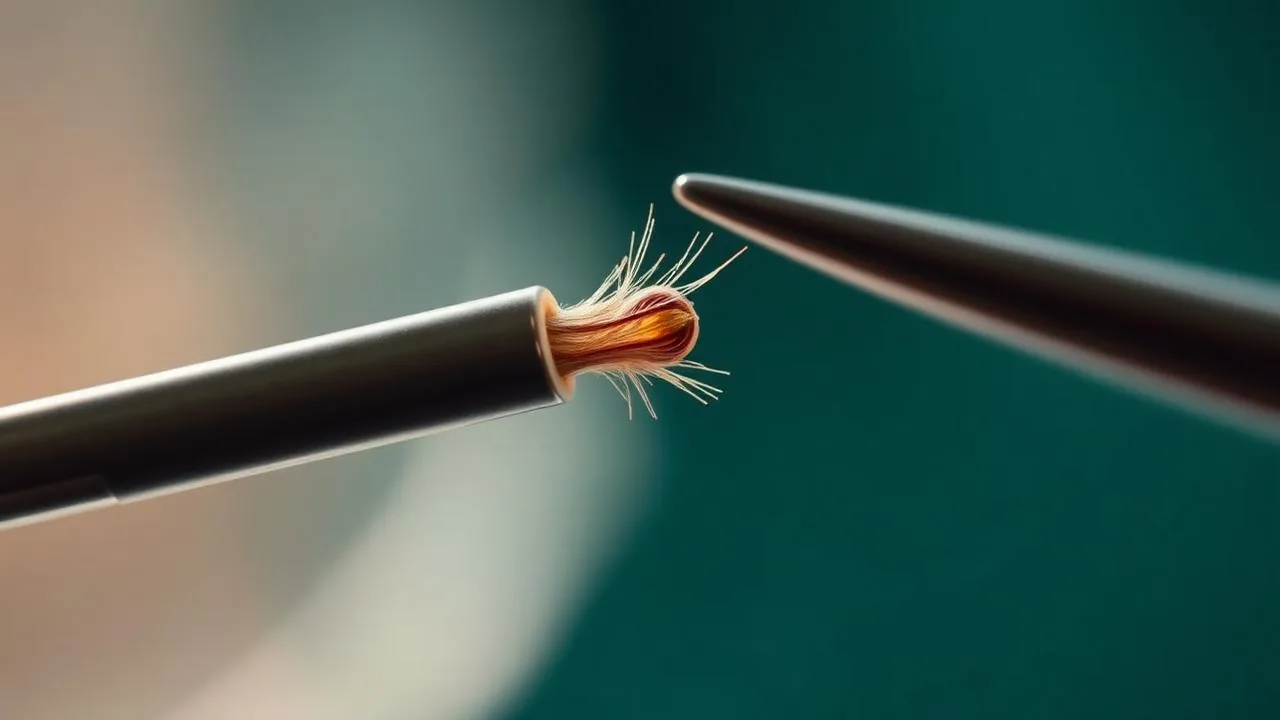
Almost everyone starting to research a hair transplant asks about the graft count first. Yet the graft count is not a starting point but an output: the result of a calculation made after measuring your donor capacity, the size of the area and the density you are aiming at.
This article explains what a graft is, how it is measured and how a realistic plan is built, step by step.
What is a graft, and how does it differ from a hair?
A graft is a follicular unit taken from the scalp in one piece. A single graft can contain 1, 2, 3 or even 4 hairs. So 3,000 grafts does not mean 3,000 hairs; at an average of 2.2 hairs per graft, 3,000 grafts is roughly 6,600 hairs.
Some clinics deliberately talk in hair counts, because the figure looks bigger. We recommend always comparing quotes on grafts.
- Single-hair grafts are used in the front row of the hairline; they determine naturalness.
- Two- and three-hair grafts create density behind that.
- If the graft distribution is never reported, the naturalness of the result has been left to chance.
Donor capacity: the value that sets the real limit
Hair at the back of the head and above the ears is resistant to androgenetic alopecia, which is why it is used as the donor area. But it is a limited resource and it is not replenished over a lifetime.
At examination, donor density (follicular units per cm²), hair calibre, hair-to-skin colour contrast and curl are measured. From a dense donor with thick hair, 4,500 grafts can be taken safely; from a sparse donor with fine hair the number may stop at 2,500.
A good plan covers today's loss while leaving a reserve for the loss that may progress over the next ten years.
Area calculation and the Norwood scale
The area of loss is measured in cm² and multiplied by the target density. In the front, 40–45 grafts/cm² is generally planned, and 30–35 grafts/cm² at the crown. Given that natural hair density is 80–100 follicles/cm², the aim of a hair transplant is not to reproduce the old density exactly but to restore visual fullness.
For a Norwood 3 patient, 2,000–2,800 grafts may be enough; in Norwood 5–6 cases, 4,000–5,000 grafts and sometimes two sessions come into play.
Be wary of exaggerated graft promises
A promise of 6,000–7,000 grafts in one session is not physiologically possible for most donor areas. Over-harvesting leaves permanent thinning in the donor area and cannot be reversed.
In addition, whether each harvested graft takes depends on how briefly it stays outside the body. The larger the number, the longer the procedure and the lower graft viability. A sustainable number is therefore always better than a large one.
What a transparent graft quote contains
The quote shared after our remote assessment sets out the graft range, the planned technique, an estimate of graft distribution, the length of the procedure, the services included and the 12-month follow-up programme. The graft count established on the day is recorded in writing in your file.
Frequently asked questions
Can a graft count be set from a photograph?
Taken correctly, photographs are enough to give a realistic range. The exact number is settled once donor density has been measured at examination.
Will I need two sessions?
In wide Norwood 5 and above cases, or for patients wanting very dense coverage, a second session can be planned at least 10–12 months after the first.
All articles
Techniques
Sapphire FUE or DHI? Which technique suits you
Choosing a technique is not a matter of fashion but a decision specific to the case. Here are the real differences between the two methods.
Planning
Cheap hair transplants: what is cut when the price falls?
Most of the cost of a hair transplant is team time, consumables and sterile conditions. Those are fixed — so when the price falls, something is being cut.
Recovery
Shock loss: when it starts and when it ends
The transplanted hairs shedding is not a failure but an expected stage. Knowing why it happens removes the unnecessary panic of month three.
Free remote assessment, no obligation.
Book a consultation