Skin Boosters and Polynucleotides
Mesotherapy treatments aimed at supporting skin hydration and quality.
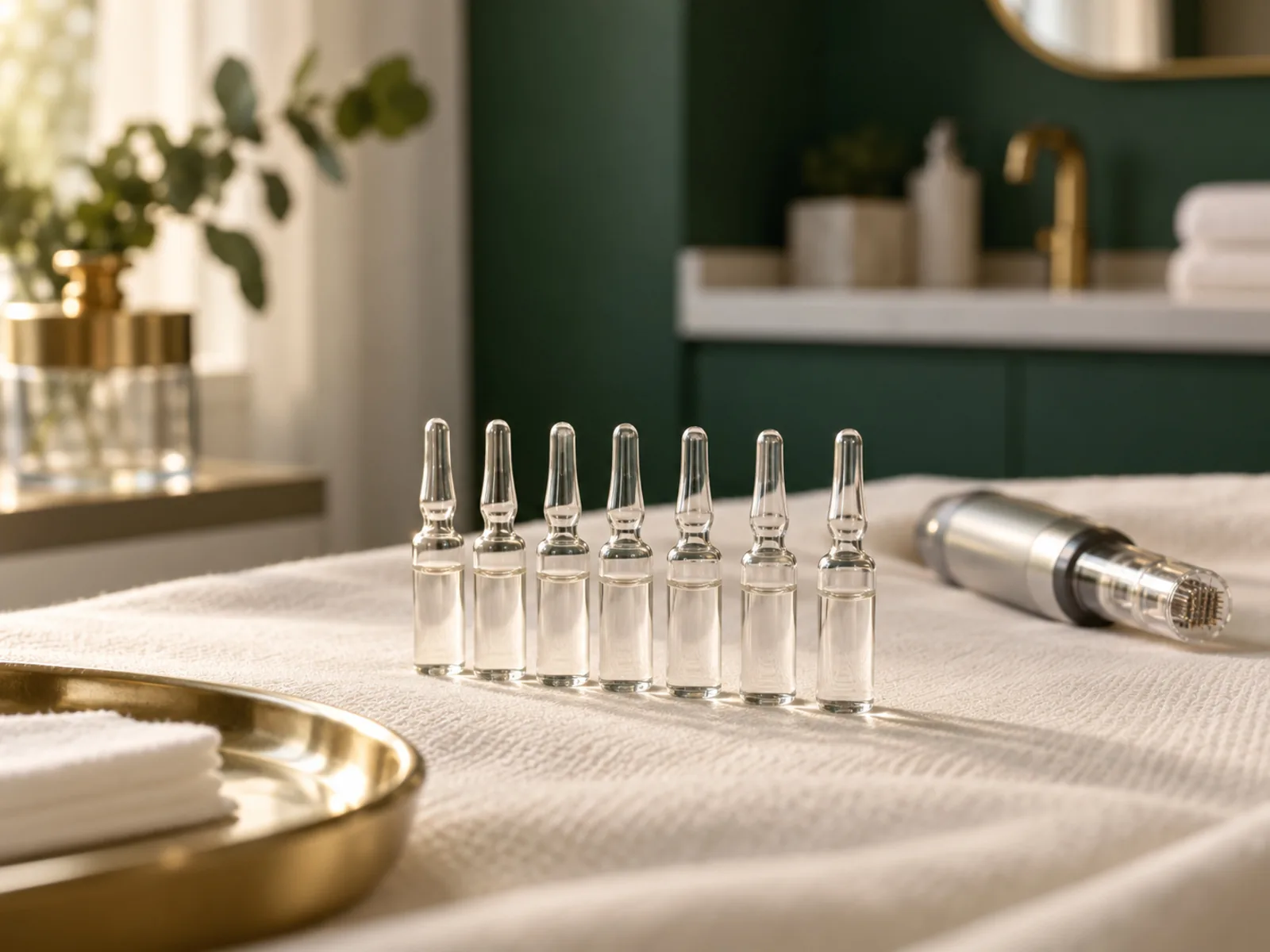
A skin booster is the micro-injection into the skin of hyaluronic acid together with vitamin and amino acid mixtures; the aim is to support the skin's water-holding capacity and quality. Polynucleotide treatments, widely known as salmon DNA, are a different preparation and aim to support the tissue's own repair processes. Neither is a volume-adding filler; both target the surface quality of the skin.
- Duration
- 20 – 30 minutes
- Sessions
- 3 – 4 sessions, 2 – 3 weeks apart
- Comfort
- Topical numbing cream
- Downtime
- Same day; short-lived redness
Who is it for?
Suitable candidates
- People describing dullness, dryness and fine lines
- People with fine wrinkling and loss of quality under the eyes
- People wanting to support skin quality on the neck, décolletage and backs of the hands
- People who do not want filler and are aiming at a more superficial improvement
When it is not appropriate
- Pregnancy and breastfeeding
- Active acne, eczema or infection in the treatment area
- A known serious allergy to fish products (for polynucleotide treatments)
- People with a bleeding disorder or on blood thinners that cannot be adjusted
Suitability is confirmed only after a physician examination and, where needed, tests. The information on this page is general and does not replace individual medical advice.
How it is done
- 01
Skin analysis
Hydration, pore condition and fine lines are assessed and the appropriate preparation chosen.
- 02
Application
Micro-injections are made across the area in a set pattern.
- 03
Session plan
The programme is completed over 3–4 sessions, with maintenance planned afterwards.
Afterwards
- No make-up for the first 12 hours.
- Avoid sauna, pool and strenuous exercise for the first 48 hours.
- Continue regular use of sun protection.
- Redness and small bumps in the first hours are normal.
Frequently asked questions
How is it different from filler?
Filler adds volume and is placed in deeper layers. These treatments do not add volume; they aim to support the skin's water-holding capacity and surface quality.
After how many sessions is a result seen?
A difference in skin texture is generally described from the second session. The programme is completed in 3–4 sessions, after which maintenance can be planned.
How long does it last?
On average 6–9 months. Skin type, age, sun exposure and smoking all affect that.